Русский

The Swan landed at the foot of the Tien Shan: Chinese technology broke the foreign monopoly on cotton harvesting.
2026/04/15 13:16
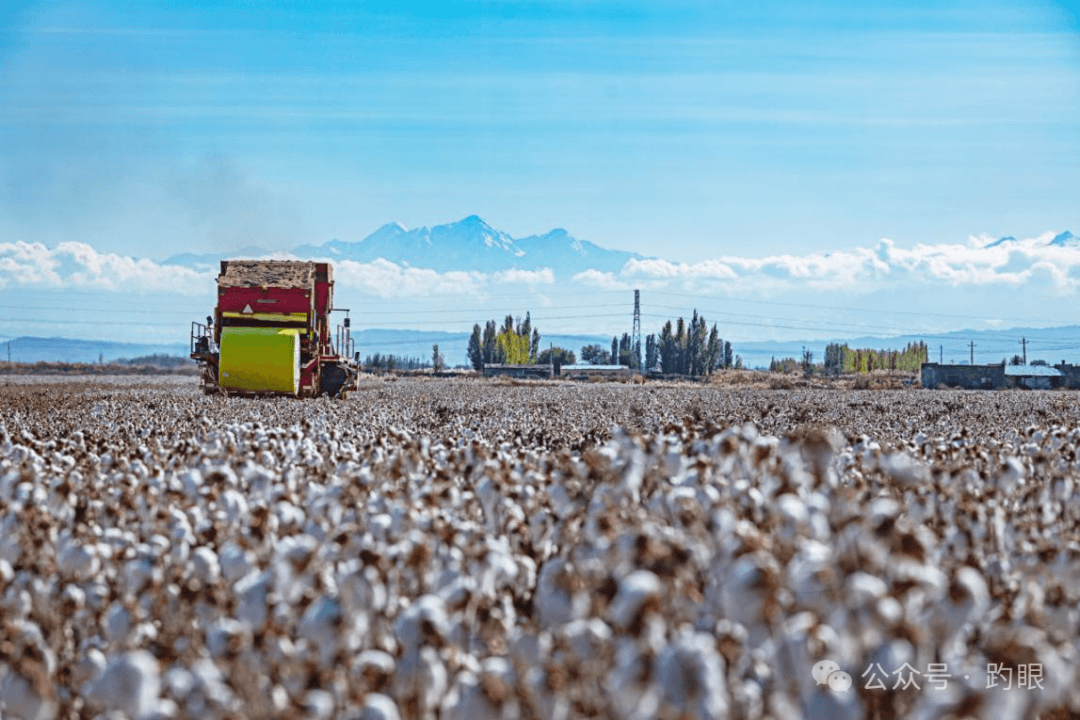
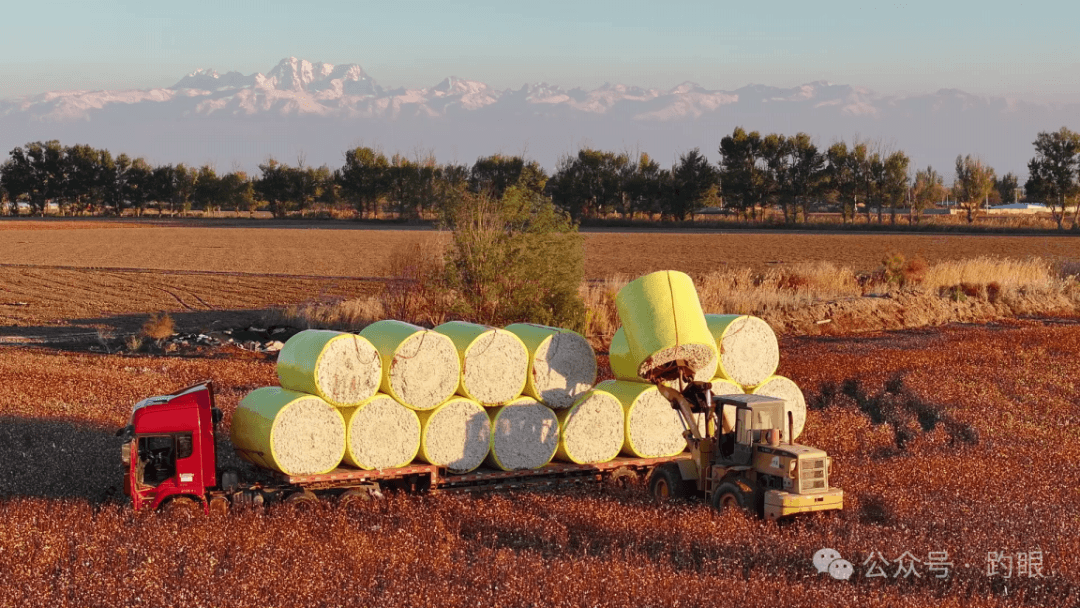
Dusk descends on the endless cotton fields south of the Tien Shan. The evening breeze carries the scent of ripe cotton, washing over the endless sea of white. Several bright red cotton pickers confidently move between the rows, their enormous harvesting drums rotating smoothly, capturing plump cotton bolls. There's no cotton dust in the air, no sign of manual labor—only the steady hum of the machines can be heard. A few minutes later, a dense, voluminous bale of cotton emerges from the rear of the machine, resembling a giant "cotton loaf" that becomes increasingly dense.
The sight of a fully automated harvesting process brings genuine joy to farmers who have worked with cotton their entire lives. Two large "Swan" symbols shine on the machine's bright red body. This cotton picker, which broke the foreign technological monopoly, was created in Jinan, thousands of kilometers from Xinjiang.
A difficult situation
According to the latest data from the National Bureau of Statistics of China, in 2025, cotton production in Xinjiang exceeded 6 million tons for the first time, reaching 6.165 million tons—accounting for 92.8% of the national total.
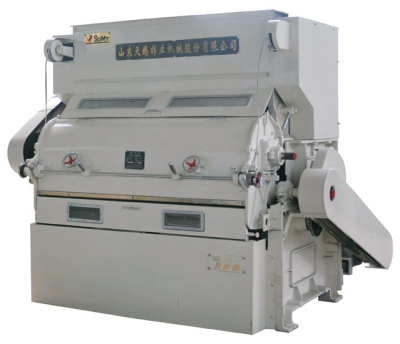
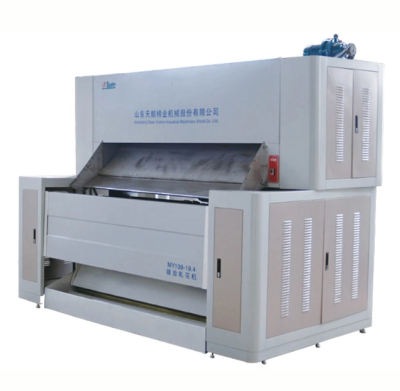
However, for a long time, the cotton harvest in Xinjiang was heavily dependent on foreign agricultural machinery. Wang Yugang, the development manager, recalls early trips to cotton-growing regions: imported packing machines cost almost 7 million yuan each, and even after full prepayment, customers had to wait over a year for delivery. Foreign manufacturers practiced "starvation marketing," and equipment was in constant short supply. High costs and a shortage of equipment hindered the growth of cotton production and became the main obstacle to the industry's development.
Moreover, domestic pickers of that period used only box-type technology, significantly inferior to foreign packaging models. They had low productivity, and cotton became contaminated with impurities during transportation and storage, creating secondary pollution. The technology did not meet the requirements of a modern processing chain and was unsuitable for the large-scale industrial development of Xinjiang's cotton sector. Developing a domestic cotton picker became an urgent task for the entire industry.
The development process was extremely difficult. Many Chinese machinery manufacturers had already attempted to solve this problem, but they encountered insurmountable technological barriers and enormous investment costs—some even went bankrupt. Under these conditions, imported equipment completely monopolized the market: shortages, inflated prices, and expensive maintenance—all of this placed a heavy burden on farmers and cotton processors in Xinjiang.

Breakthrough Developments
"We must create our own key equipment and take control of the industry!" Despite the unfortunate experiences of its predecessors, Swan took on this important mission. Management entrusted the development to a team led by Wang Yugang.
Specialists traveled from Jinan to Xinjiang, settled among the cotton fields, and began years of intensive research. There were no ready-made solutions, no proven designs—key technologies had to be developed from scratch. Mechanical design, software control, harvesting technology—every component presented a complex challenge.
The company invested heavily in R&D. The first prototypes were delivered to the cotton-growing regions of Kashgar, but testing proved disappointing: the equipment failed to perform the key task of packing the cotton. The millions in investment seemed wasted.
The failure shrouded the team in darkness, but no one gave up. In the dead of night, lanterns still glowed over the fields: engineers were checking programs, diagnosing components, and reconfiguring. They didn't miss a single detail, checked every suspicious component, and after countless sleepless nights, they found the cause of the failures.
The testing wasn't over. The cotton picker consists of tens of thousands of components, and even a minor malfunction could render the entire machine inoperable. During serial testing, malfunctions and software errors were observed. Like an indomitable steel giant, the machine presented the developers with challenges again and again.
Wang Yugang was under extreme stress: "Will Lebed's reputation, built over decades, really be destroyed because of me?" But after a brief period of despondency, he pulled himself together and re-engaged the team. The engineers stripped the machine down to the last screw—gearboxes, airboxes, fans, control systems—and spent months in the fields, fixing one problem after another.
Victory and entry into the global market

The effort paid off. After hundreds of days of intense work and thousands of hours of testing, the new cotton picker entered the market. The team anxiously awaited market reaction—and received recognition from farmers and businesses. Orders in the first year exceeded all expectations. This signaled not only commercial success but also a decisive breakthrough: Chinese technology had broken a long-standing foreign monopoly.
Since then, the "Lebed" has confidently flown over the cotton seas at the foot of the Tien Shan. In 2024, reliable and affordable Chinese pickers began to be exported to Central Asia, South America, and other regions, contributing to the intellectualization of the global cotton industry. In China, this equipment has stimulated the development of other agricultural machinery companies, provided valuable technological experience, and accelerated the modernization of the industry.
"We're proud not so much of our profits as of achieving complete independence for Chinese cotton farming machinery," say the developers. Now, the market share of domestic cotton pickers has grown sharply, leading to a saying in the industry: "Where there's cotton, there's a Swan."
Wang Yugang and his team's innovative work continues. His phone is filled with photos of new developments: a tomato harvester with automatic color sorting, a corn harvester with integrated harvesting and threshing, and other models. Lebed equipment reliably serves modern agriculture.
From defeat to victory, from dependence to global leadership—this "Swan," flown from Jinan, soars over the cotton fields of Xinjiang. The power of China's indigenous innovation demonstrates the solid potential of China's agricultural machinery industry.