Русский

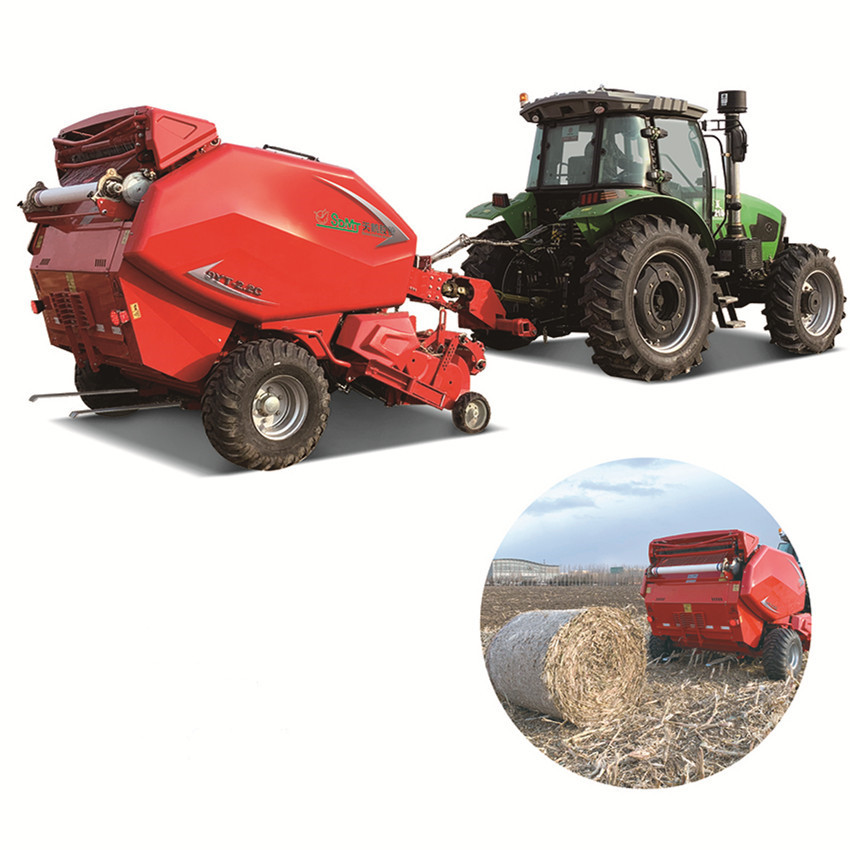
Round bale baler
High efficiency: double press roller with forced feeding - more mass, higher productivity.
Anti-clogging: in case of clogging with grass, remote opening of the lower chamber via the terminal.
Double strapping: twine or net; bale density is adjusted at the terminal.
High adaptability: the upgraded dummy wheel follows the working wheel better, improving cross-country ability on any terrain.
Low maintenance costs: conveyor assembly with strict control at all stages – from production to shipping.
A round baler is an agricultural equipment designed to press crops (such as grass, hay, etc.) into round bales. It typically consists of a rotating bale chamber and a feeding system that collects and compacts the crop mass into round bales. The resulting bale has a high density: the outer layer is dense, the inner layer is looser; The outer shell provides thermal insulation and moisture protection, and the inner layer is highly breathable, making storage easier.
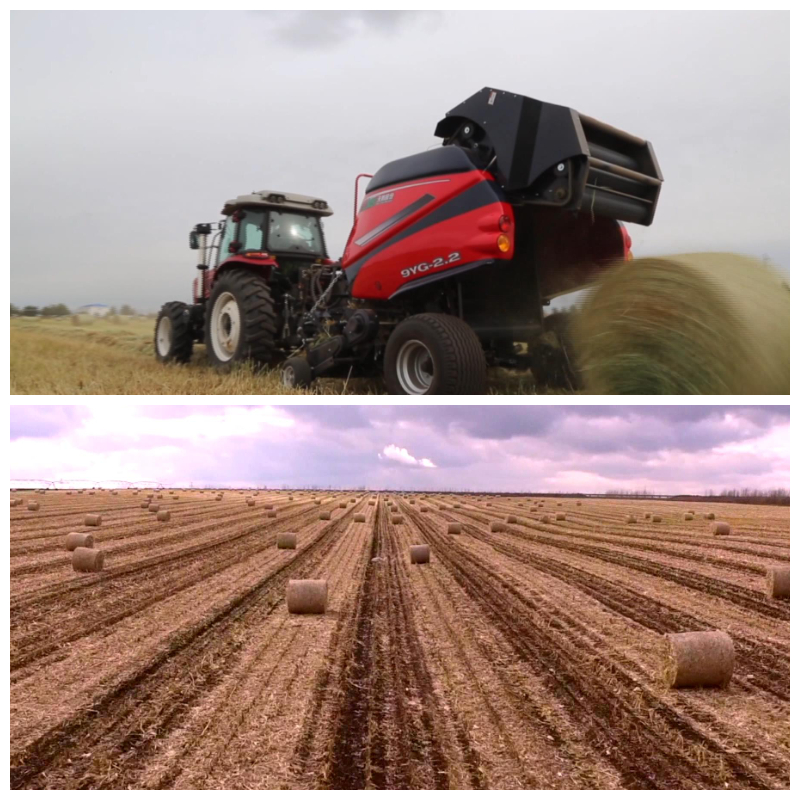
Specifications
| Parameter | A unit of measurement | Characteristic |
|---|---|---|
| Installed power | kW | ≥80 |
| Construction | — | Spring teeth |
| Dimensions | mm | 4200 × 2960 × 2400 |
| Weight | kg | 4200 |
| PTO rotation speed | rpm | 540–1000 |
| Pickup width | mm | 2200 |
| Baling chamber diameter | mm | 1200 |
| Baling chamber length | mm | 1400 |
| Number of rows of spring teeth | — | 5 |
| Distance between spring teeth | mm | 70 |
| Number of knives | pcs. | 12 |
| Theoretical cutting length | mm | 65 |
| Working speed | km/h | 2-6 |
| Bale weight | kg | Straw ≥350 Forage grass ≥500 |
Acceptance control of products
Shandong Swan Cotton Industrial Machinery Stock Co., Ltd. conducts rigorous, comprehensive inspection of every product before it leaves the factory. Key inspections include:
(1) External inspection: checking whether the product's appearance meets the requirements, including color, shape, size, surface quality, etc. Inspection can be carried out visually or using auxiliary instruments (e.g. microscopes, measuring instruments).
(2) Functional testing: Verifying the correct operation of all product functions. This is accomplished by starting up the equipment, conducting functional tests, or using specialized test equipment to confirm operational characteristics and operability.
(3) Packaging inspection: checking the integrity of the packaging, the clarity of the markings, and the compliance of the packaging materials with established requirements. This ensures that the product will not be damaged during transportation and storage and will be correctly identified.
(4) Checking labels and instructions: Checking the accuracy, clarity, completeness and compliance of labels and operating instructions with current regulations and standards.
Packaging and delivery
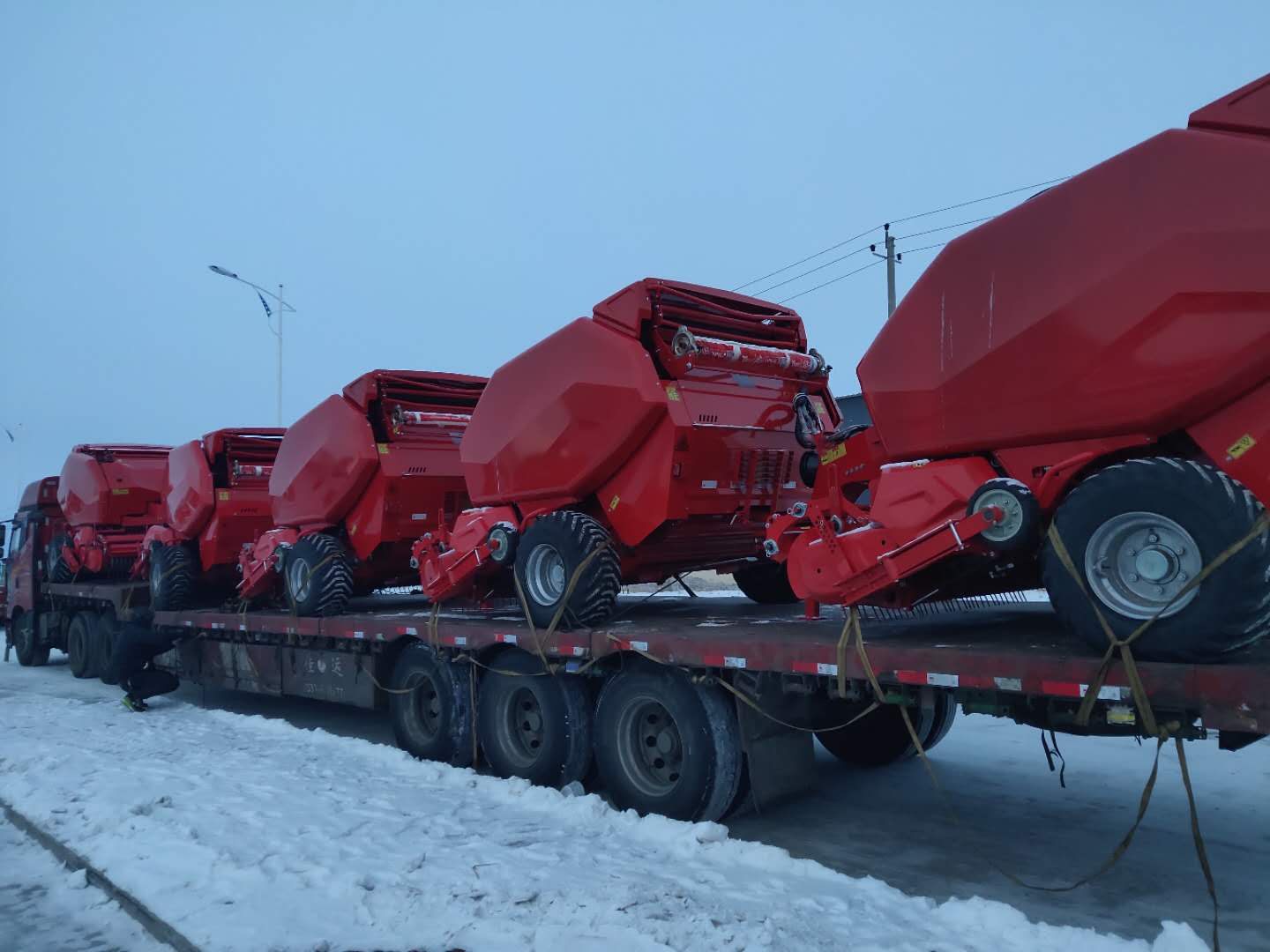
(1) Each machine is securely fixed and reinforced inside the container to ensure safe delivery to the destination port.
(2) The entire process of loading and sealing the container is documented by means of photography or video recording, which makes the entire process transparent and controllable.
(3) The company cooperates with reliable shipping companies, key stages of delivery are updated in real time.