Русский

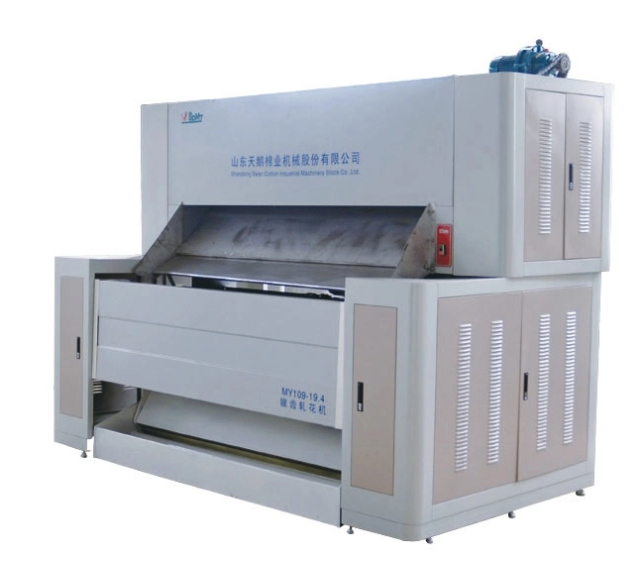
Cotton gin MY109-19.2 (saw gin)
Product benefits
High Fiber Quality: Designed with user requirements in mind, the cotton fiber's appearance is enhanced, while minimal impact maintains its natural state without damaging the structure.
Energy saving and easy maintenance: Efficient design ensures easy maintenance, saving resources and reducing energy consumption, reducing operating costs.
Optimum separation efficiency: The enlarged working chamber and the distance between the saws ensure optimum cotton layer density, promoting natural separation of the fibre and seed, while maintaining the shape and length of the fibre.
Low Short Fiber Content: Large saw gaps minimize the formation of short fibers in the finished product, increasing its commercial value.
Flexibility and Ease of Adjustment: The specialized design of the chamber facilitates opening and closing, as well as the precise adjustment of trash removal. A patented design allows the machine to be tailored to specific types of cotton, while the configuration process remains simple and intuitive.
Improved cleaning efficiency: Application of hydromechanical principles improves operating conditions, increases overall cleaning efficiency and improves the consistency of finished fiber quality.
Stable operation and wide applicability: The equipment features stable operation and high efficiency, and can meet the cotton processing needs of various cotton-producing regions around the world.
Flexible packaging and secure delivery: We support customized packaging methods based on customer requirements, with secure fastening in the container and transparent control of the entire delivery process.
Strict Quality Control: Each piece of equipment undergoes comprehensive testing before shipment, ensuring reliability and compliance with standards.
Product details
General description
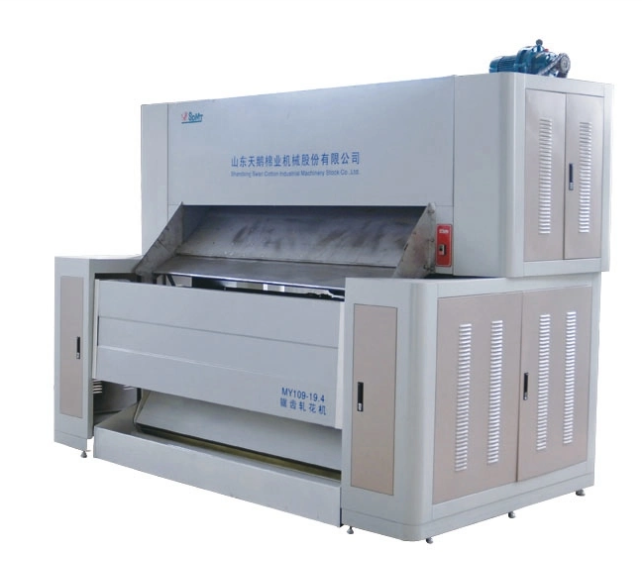
Design Features and Operating Principles
The enlarged working chamber and optimized distance between the saws (19.4 mm) ensure optimal density of the cotton layer, promoting the natural separation of the fiber and seeds, maintaining their original shape and length.
Large gaps between saw blades reduce the formation of short fibers in the finished product, increasing its quality and commercial value.
The special design of the chamber allows for easy opening and closing, as well as free adjustment of debris removal, simplifying maintenance and reducing equipment downtime.
Minimal impact on cotton preserves its natural state, without damaging the fibers and ensuring a high-quality appearance of the finished product.
The rational design reduces energy consumption and simplifies maintenance, reducing operating costs for the customer.
Specifications
|
Indicator
|
Unit of measurement
|
Meaning
|
|
Design Capacity
|
kg/h
|
600–850
|
|
Installed power
|
kW
|
31.12
|
|
Gin quality
|
—
|
Meets or exceeds national standards for similar cotton
|
|
Noise level
|
dB(A)
|
90
|
|
Number of saws
|
pcs
|
109
|
|
Saw diameter
|
mm
|
Φ320
|
|
Distance between saws
|
mm
|
19.4
|
|
Brush cylinder diameter
|
mm
|
Φ380
|
|
Overall dimensions (W×D×H)
|
mm
|
1708×3090×2284
|
|
Machine weight
|
kg
|
3000
|
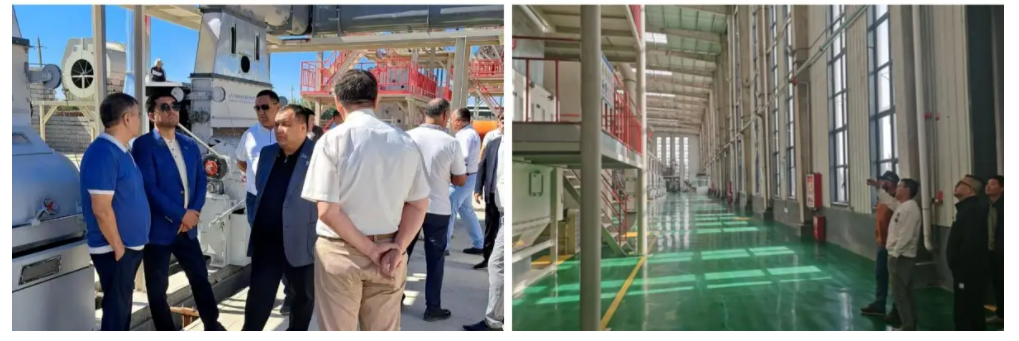
Packaging and delivery
Each machine is securely fastened and secured in a container, ensuring the safety of the equipment under any transport conditions to the destination port.
The entire container loading and sealing process is captured on photo or video, making the process transparent and controllable, allowing the customer to monitor preparations for delivery.
Collaboration with reliable and proven shipping companies ensures prompt delivery status updates at all key stages, allowing customers to track the location of their equipment in real time.
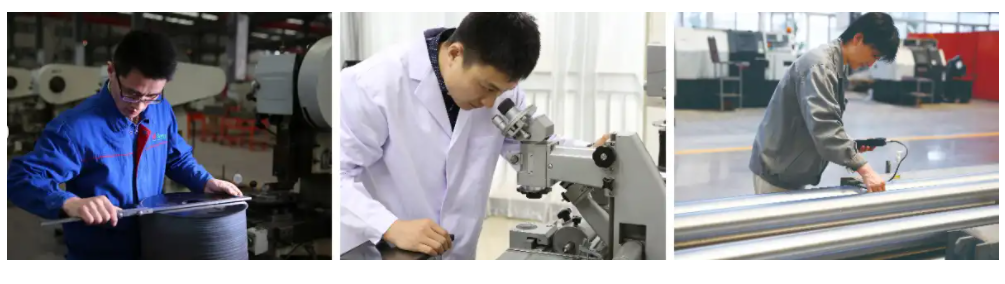
Product Quality Check
Visual inspection: Checking the appearance of the equipment, including colour, shape, dimensions and surface quality (carried out both visually and using measuring instruments to control dimensional accuracy).
Functional testing: Verification of the correct operation of all equipment systems and mechanisms through a trial run or using specialized test equipment, guaranteeing stable operation in various modes.
Safety testing: Confirmation of equipment compliance with electrical, mechanical and chemical safety requirements, verification of the reliability of protective elements and the absence of hazardous areas.
Packaging Inspection: Assesses the integrity of packaging materials, the legibility of markings, and the compliance of packaging with transportation and storage requirements, ensuring the safety of equipment during delivery and storage.