Русский

Heavy equipment of a great power that laid the foundations of the country's might. The Swan cotton picker is on display at the National Museum of China at the exhibition "Achievements of Chinese Manufacturing during the 14th Five-Year Plan Period."
Once upon a time in the golden autumn, the cotton fields of Xinjiang created a picturesque picture of the harvest: cotton pickers, bent over their work, became silhouettes of hard work. Today, bright shades of “Chinese red” are rapidly cruising across the endless “white ocean” of fields - modern cotton pickers that collect cotton with high efficiency and immediately pack it into rolls. This historical scene is now on display at the National Museum of China in the exhibition “Laying the Foundations of a Powerful Power: Achievements of Chinese Manufacturing during the 14th Five-Year Plan Period,” where a six-row cotton baling machine from Swan Cotton Picker is on display.
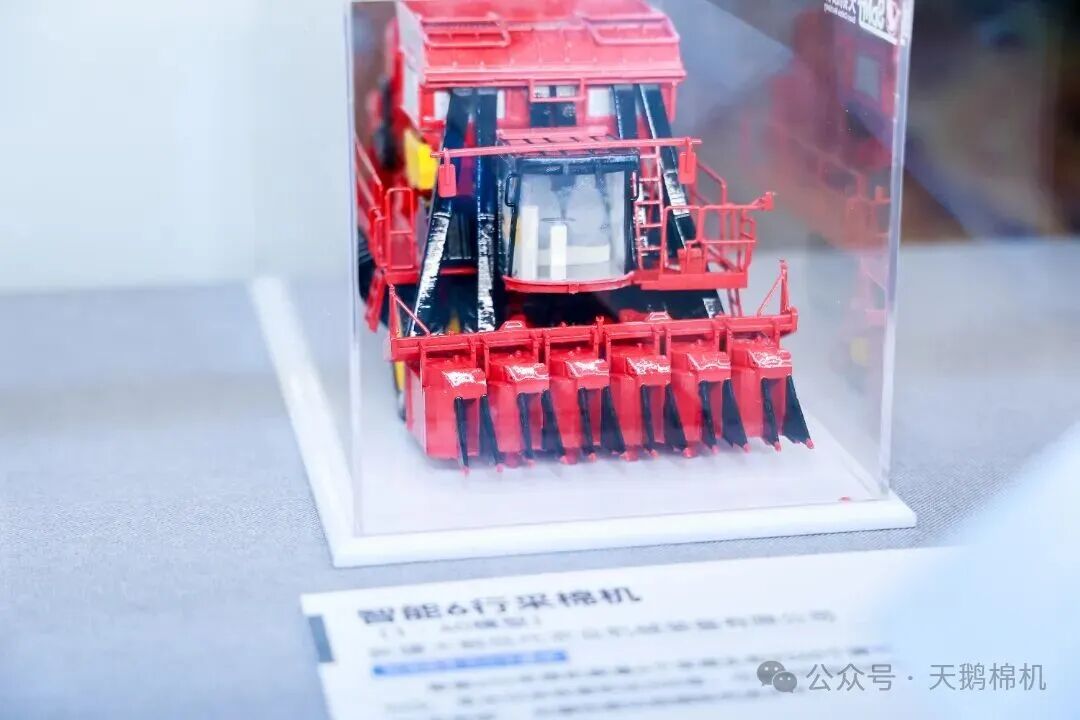
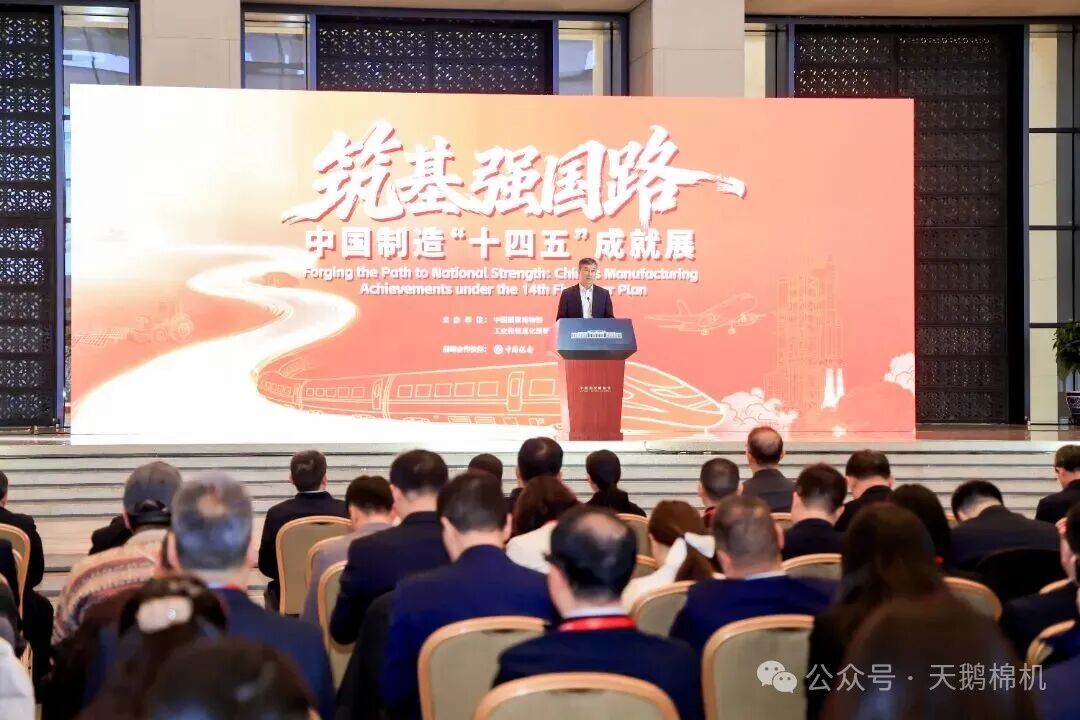
On December 29, the National Museum of China inaugurated the exhibition “Laying the Foundations of a Powerful Power: Achievements of Chinese Manufacturing During the 14th Five-Year Plan Period.” The organizers were the National Museum of China and the Information and Propaganda Center of the Ministry of Industry and Information Technology of the People's Republic of China. The exhibition features more than 300 exhibits (sets), fully reflecting the dynamic development of Chinese production during the 14th Five-Year Plan period. The six-row cotton picker with a pressing function from the Swan Cotton Picker company, as one of the landmark achievements in the field of domestic production of high-tech agricultural machinery during the specified period, became the only cotton picker included in the exhibition. It is displayed in the main temple of history and culture of the country, demonstrating to all the people of China the strong technological power and outstanding achievements of Chinese production in the field of agricultural modernization.
China is one of the key countries in the world for both production and consumption of cotton. However, for a long time, cotton harvesting in China was carried out primarily by hand. Every autumn, in August-September, when the cotton picking season begins in Xinjiang, tens of thousands of pickers from Henan, Anhui, Sichuan and other regions are sent there on special “cotton picking trains”. Many of them suffered serious occupational diseases due to prolonged work in an inclined position. At the same time, as the standard of living of the population increased and urbanization accelerated, more and more rural labor resources moved to cities, which inevitably led to an increase in the cost of manual labor when growing cotton.
To solve this problem, back in 1996, the Xinjiang Production and Construction Corps was the first in the country to import and test foreign cotton picking machines. In the 21st century, mechanized cotton harvesting entered the phase of mass implementation. However, the market for high-tech cotton pickers has long remained under the complete control of foreign brands, and Chinese farmers have been forced to buy expensive imported equipment. The cost of one imported machine with a pressing function reached 6–7 million yuan, which was unaffordable for most cotton growers. In addition, maintenance and repairs depended on foreign specialists: spare parts were delivered with long delays and at inflated prices, and in the event of a breakdown one had to literally “wait for mercy from foreigners,” which often led to delays in harvesting...
Cotton pickers, especially models with a pressing function, which are characterized by higher productivity and complexity of manufacture, require the use of advanced technologies in several areas at once. Due to high technological barriers, they are considered the “crown” of agricultural engineering. Their key technologies were for a long time under the monopoly of foreign companies, which became a “bottleneck” holding back the development of the entire cotton industry. Moreover, in the past, China has already faced the cessation of supplies of cotton picking machines from abroad - like the sword of Damocles, this threat was a reminder that without its own high-tech means of production, it is impossible to ensure the true security of modern agriculture. Under these conditions, localization of the production of high-tech cotton picking machines has become an inevitable choice to overcome industry restrictions and ensure the safety of the cotton industry.
As a leading enterprise in the field of cotton picking machinery, Swan Cotton Picker has resolutely taken on the challenge of import substitution and made the development of high-tech cotton picking machines its strategic priority, embarking on the path of innovation breakthrough. With the active support of government policies, the company has significantly increased its investment in research and development, allocating hundreds of millions of yuan for technical testing and pilot production. Strengthening industry-science-education cooperation, the company assembled a team of key developers who worked day and night to overcome such complex technological challenges as the high-speed cotton picking system, compression and baling of ginned cotton, and heavy-duty hydrostatic transmission. After years of persistent research, in 2019, Swan Cotton Picker successfully developed China's first six-row self-propelled cotton harvester with baling function, thereby completely closing the technological gap with foreign counterparts, and launched its mass production in 2022.
Following the strategic course of “high-tech, intellectualization and environmental friendliness,” the company has built one of the country’s most advanced production lines for high-tech cotton picking machines in Xinjiang. The latest information technologies such as 5G, big data, artificial intelligence and the industrial internet are deeply integrated here, covering the entire life cycle - from design and production to delivery. The architecture “cloud data center - edge computing nodes - intelligent end devices” has been created, providing flexible planning for the production of key components and assembly of finished machines, as well as full traceability of product quality. In July this year, “Swan Cloud-to-Edge Smart Cotton Picker Factory” was included in the list of “First Pilot 5G Smart Factories of Xinjiang Production and Construction Corps,” becoming a model of digital transformation in the agricultural machinery industry.
Today, Xinjiang, which accounts for over 90% of the total cotton volume in China, during the harvest season turns into an arena for the action of “Chinese red”: dozens of modern machines ply across the expanses of cotton fields from north to south of the Tien Shan, as if picking snow-white cotton and immediately pressing it into rolls. The era when cotton pickers worked constantly bending over is a thing of the past. One six-row self-propelled Swan cotton picker can replace the labor of 2,000 cotton pickers, harvesting up to 500 mu (about 33 hectares) of cotton in one day. Its 3,360 spindles provide a cleaning rate of up to 97%. Combined with a subsequent intelligent cotton processing line developed by Swan itself, this allows end-to-end control of cotton quality at all stages.
During the “14th Five-Year Plan” period, clusters of enterprises producing agricultural machinery, among which the Swan Cotton Picker company stands out, successfully solved a number of critical technological problems, creating a complete chain of “research - production - service”. Thanks to this, high-quality and affordable domestic cotton picking machines entered the market. The share of domestic machines in the total fleet of cotton harvesting equipment in the country reached almost 70%, putting an end to the era when “Chinese cotton was harvested with imported machines.” The cost of purchasing cotton picking machines for farmers has almost halved, and the cost of picking cotton has dropped from 240 to about 180 yuan per mu. More importantly, China's cotton fields finally have their own "steel giants," and the global cotton industry now has a highly efficient and reliable "Chinese solution" for large-scale mechanized harvesting.
Relying on the domestic market, Swan Cotton Picker is actively entering the international arena, spreading the symbol of "China's intelligent manufacturing" around the world. As part of the Belt and Road Initiative, Swan cotton pickers are already being exported to countries in Central Asia, South America and Africa. The bright "Chinese red" cars have become a recognizable and impressive part of the landscape of cotton fields along the Belt and Road routes. Thanks to the excellent price-quality ratio, as well as high product reliability, the company is confidently strengthening its position in the international market, offering the world Chinese technologies and equipment for modernizing the cotton industry.
The innovative breakthrough in the creation of high-tech cotton harvesting machines by Swan not only changed the situation in which key segments of agricultural machinery for a long time remained under the monopoly of foreign manufacturers, but also gave a powerful impetus to the qualitative development of the entire cotton industry. The participation of this equipment in the exhibition of achievements of Chinese production during the 14th Five-Year Plan period was not only recognition of Swan’s success in import substitution, but also clear evidence of the high level of development of Chinese agricultural machinery.
From an honorable appearance in the halls of the National Museum to practical application in cotton fields around the world, the path of the Swan Cotton Picker company leads to even wider horizons. In the future, the company will consistently follow its strategy of “strengthening its position in the cotton harvesting equipment segment, breaking through in the field of cotton harvesting machines and expanding into related segments of agricultural machinery”, continuing to deepen scientific and technological research, improve the product line of high-tech equipment and make a significant contribution to ensuring the country’s food and cotton security, as well as to the development of modern agriculture. “Made by Swan” will shine ever brighter in both the domestic and global markets.