Русский

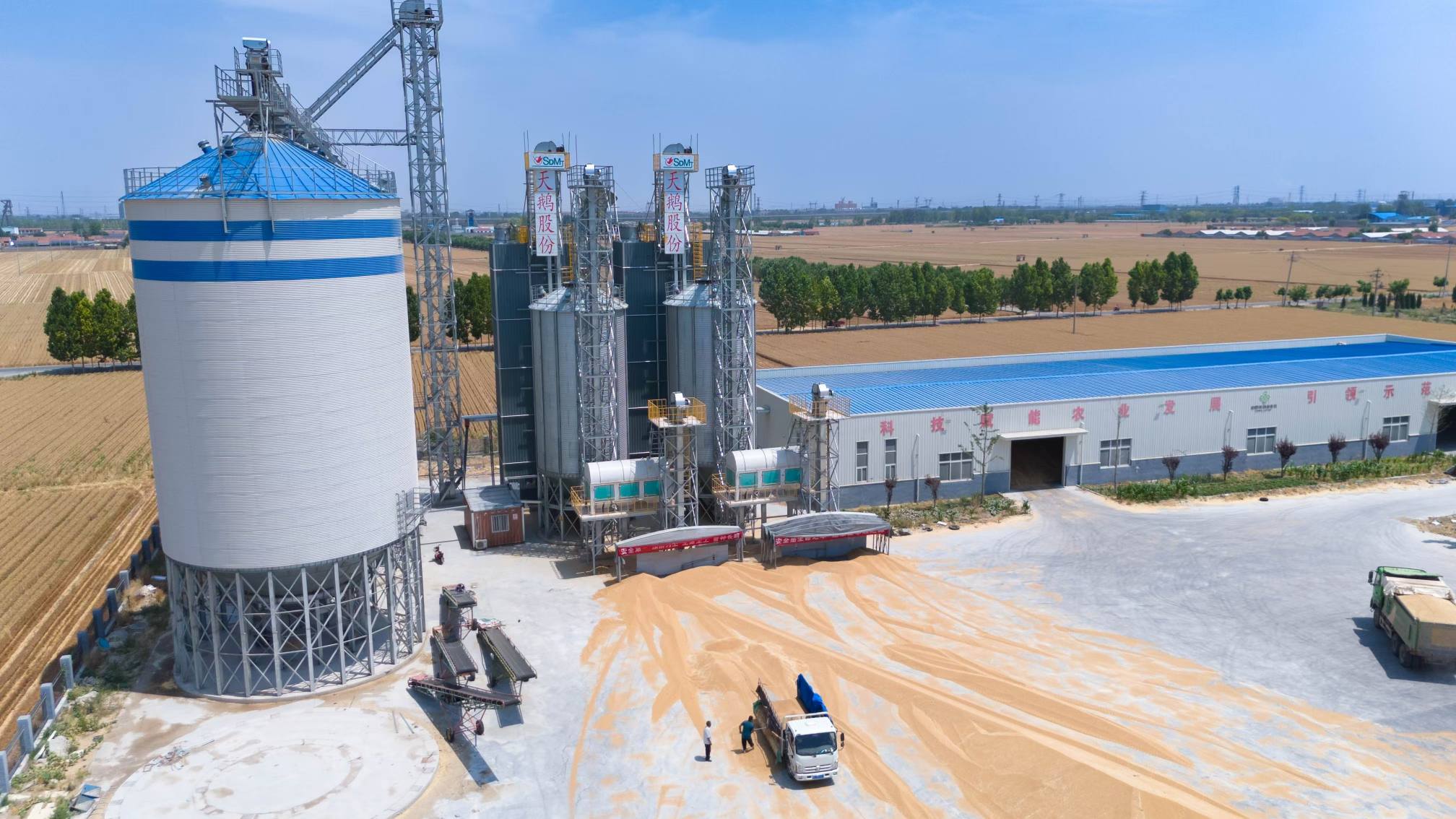
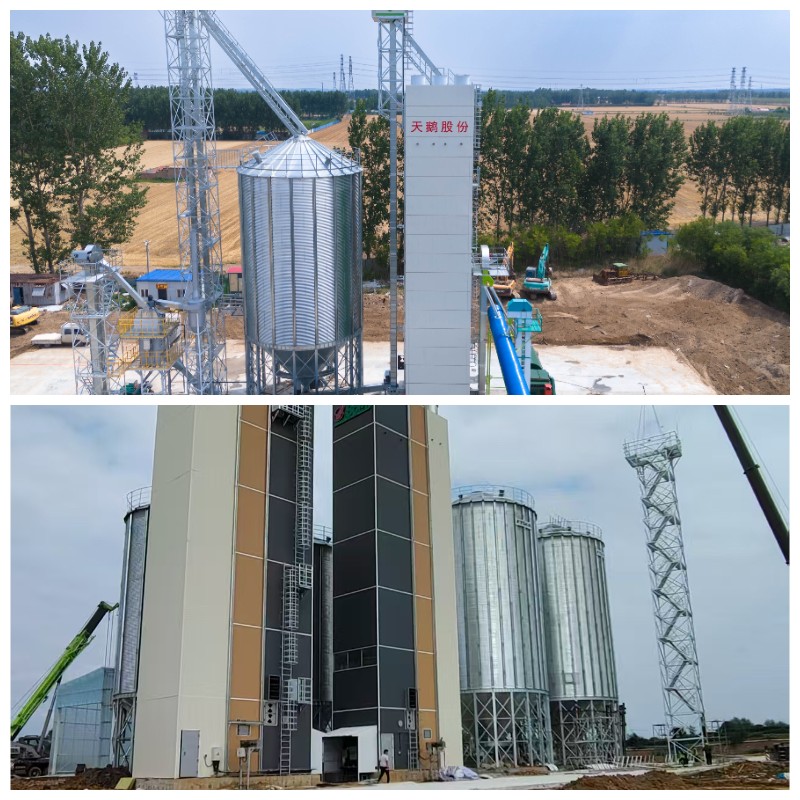
Large drying tower
1. Quiet and eco-friendly: Noise level less than 85 dB;
2. Galvanized material, durable: Double-sided zinc-coated material 275g/m²;
3. Heat- and moisture-resistant axial fans: 3 pcs. for moisture removal, 2 pcs. for heat recovery and collection of impurities;
4. Imported linear low-nitrogen burner of direct row (universal for high and low temperatures): Thermal power 4000 kW;
5. Grain unloading system: Double-sided pneumatic grate for unloading, reduces crushing during unloading and ensures self-cleaning inside the tower;
6. Equipped with an adjustable wet grain distributor when feeding into the tower, ensuring uniform loading;
7. Thermal insulation system: The main structure is covered externally with thickened basalt cardboard, which is then sandwiched between a thermally insulated panel. Double thermal insulation reduces noise and increases thermal efficiency.
Operating principle: Continuous process with vacuum, combined low- and high-temperature, using natural gas as a heat source;
Nominal capacity: 75 tons, dimensions: 7.65 m * 4.5 m * 22 m;
Performance: At air temperature of 5-15℃:
Reduction of wheat moisture from 19% to 14%: ≥ 1000 t/day.
Reduction of wheat moisture from 21% to 14%: ≥ 800 t/day.
Drying of corn, sorghum, rapeseed, rice and wheat seeds is possible.
Low emissions and energy savings: Natural gas consumption during drying of commercial wheat (from 19% to 14%) ≤ 6 m³/t.
Shandong Swan Cotton Machinery carries out strict and comprehensive quality control on every product before shipment. Key inspection aspects include the following:
External inspection
The product's appearance is checked to ensure it meets requirements, including color, shape, dimensions, and surface finish. Inspection can be performed visually or using auxiliary instruments (e.g., microscopes, measuring devices).
Functional check
The product's proper functioning is verified. This is achieved by operating the product, conducting functional tests, or using specialized test equipment to confirm its characteristics and functions.
Checking the packaging
The integrity of the product packaging, the clarity of the markings, and the compliance of the packaging materials with established requirements are checked. This ensures that the product will not be damaged during transportation and storage, and also ensures its proper identification.
Checking labels and instructions
The accuracy, clarity, and completeness of information on product labels and operating instructions is checked, as well as their compliance with current regulations and standards.