Русский

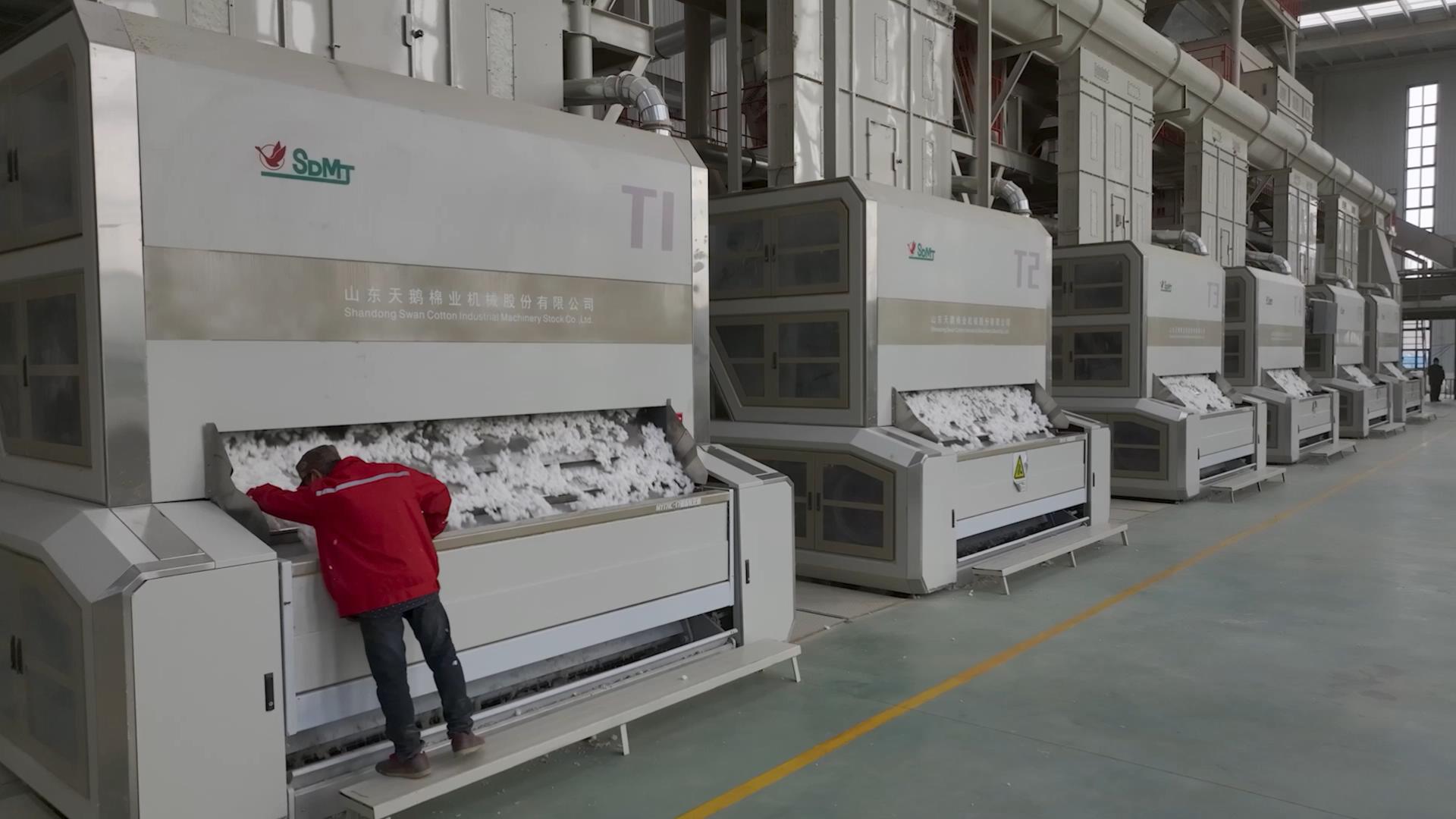
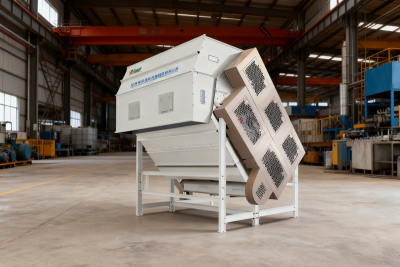
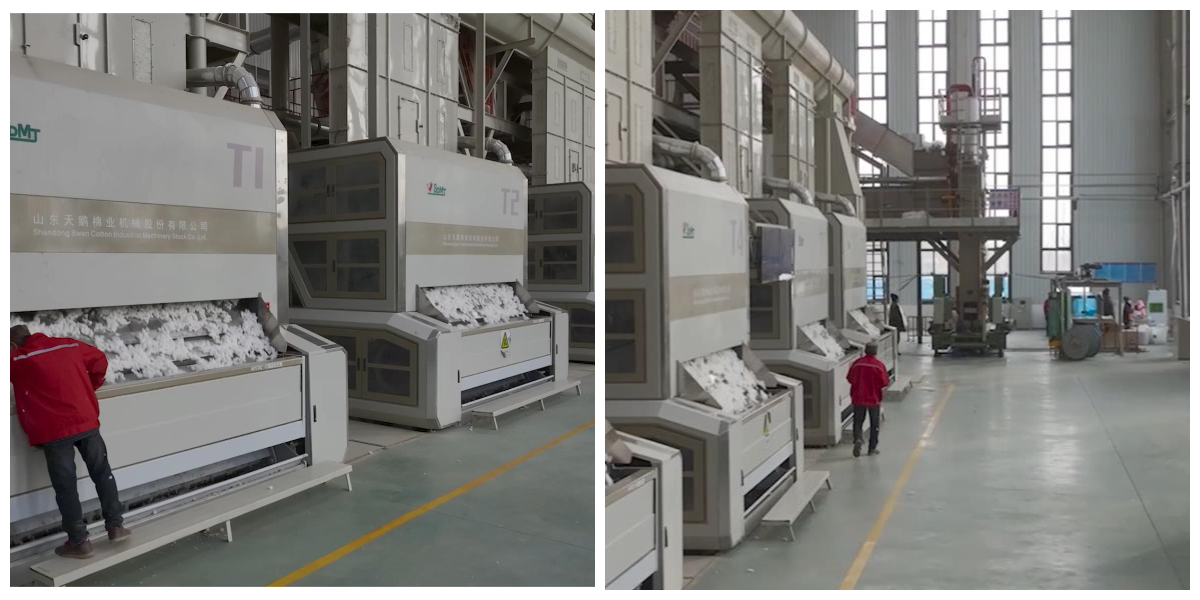
Cotton cleaning machine
New upper design: Complete cleaning and fluffing of cotton, effective removal of debris, uniform advancement, minimal damage and dust reduction.
Automatic control with high stability and safety ≥98%.
Seed unloading through the middle chamber: high adaptability to wet cotton, energy saving.
Scientific and rational design with modern technologies and materials.
The streamlined, closed protective cover ensures safety and environmental friendliness.
Possibility of flexible combination of machines to create production lines of various sizes.
? Cotton Saw Gin MY149-17
1. Introduction to the Product
The cotton saw gin model MY149-17 is specially designed for separating fiber from cotton seeds and cleaning cotton seeds.
| Parameter | A unit of measurement | Meaning |
| Model | MY149-17 | |
| Designed output | kg/h | 800-1300 |
| Equipped power | kW | 51.62 |
| Lint ginning quality | Meets or exceeds the national standard for ginned cotton | |
| Noise level | dB | 90dB |
| Number of saw blades (Pieces of saws) | pcs. | 126 |
| Diameter of saw blades | mm | 320 |
| Saw spacing | mm | 19.4 |
| Diameter of brush cylinder | mm | 80 |
| Overall dimensions (W*D*H) | mm | 3232*3670*3654 |
| Machine weight | kg | 5200 |
? Packaging and Delivery
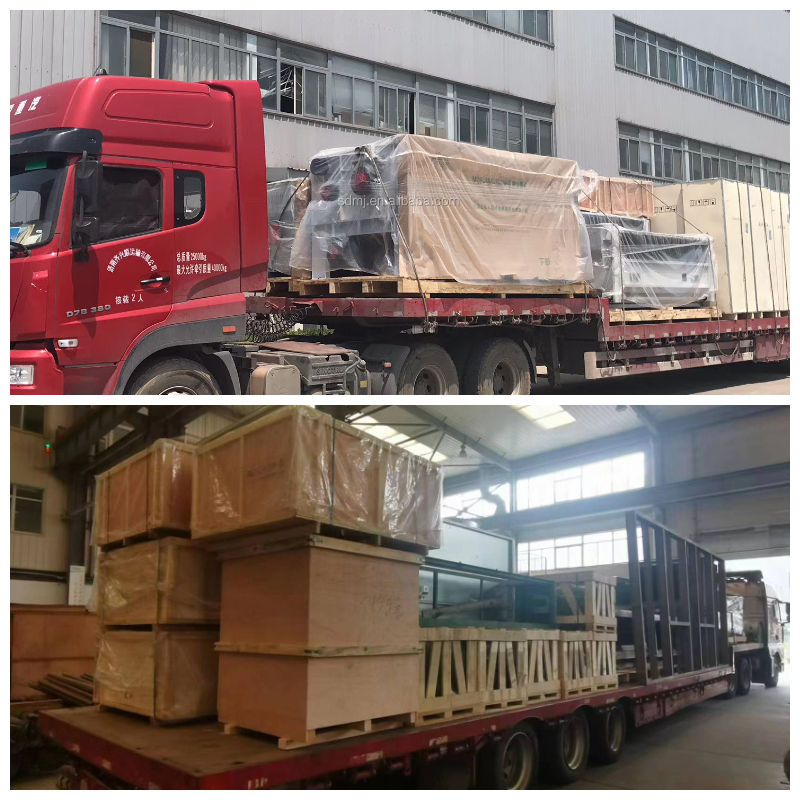
Swan shares supports customized packaging methods for customers.
(1). Each machine is securely secured and reinforced in a container to ensure safe delivery to its destination port.
(2) The entire process of product loading and container sealing is recorded by photo or video, making the entire process visible and controllable.
(3). Cooperation with a reliable shipping company, key time points (stages) are updated in real time.
? Product Inspection
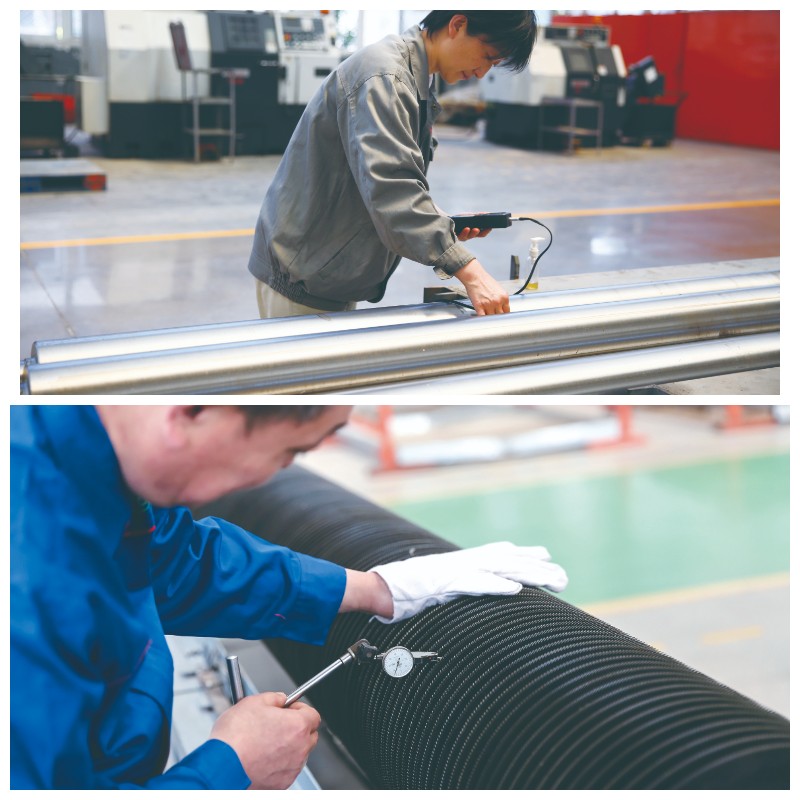
We conduct rigorous comprehensive testing on every factory product, which mainly includes the following:
(1). Appearance inspection:
Checking whether the product's appearance meets requirements, including color, shape, size, surface cleanliness, etc. This can be done by visual inspection or using auxiliary instruments (e.g. microscopes, measuring instruments).
(2). Functional Testing:
Verifying the correct operation of a product's functions. This can be accomplished by operating the product, conducting functional tests, or using specialized test equipment to verify the product's performance and functionality.
(3). Safety testing:
Verifies that the product meets relevant safety standards and regulatory requirements. This may include testing for electrical safety, mechanical safety, chemical safety, etc.
(4). Packaging inspection:
Checking the integrity of the product packaging, the clarity of the label, and the compliance of the packaging materials. This ensures that the product will not be damaged during transportation and storage and that it can be correctly identified and recognized.