Русский

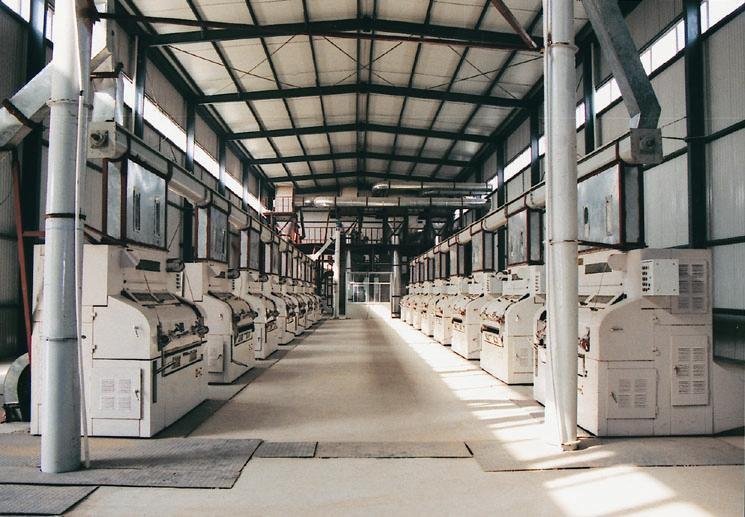
Cotton gin
Designing with the user in mind improves the appearance of the fiber.
Scientific and rational design: convenient maintenance, energy saving.
Minimal impact on cotton, maintaining its natural state.
The large working box and increased distance between the saws ensure correct application, natural separation of fibres and seeds, and preservation of the fibre shape and length.
A large gap between the saw blades reduces the short fibre content.
Special box design: easy opening/closing, free adjustment of waste removal.
Patented design: selection of machine according to cotton type, convenient adjustment.
The use of hydrodynamics improves cleaning efficiency and fiber quality
? 1. Product Introduction
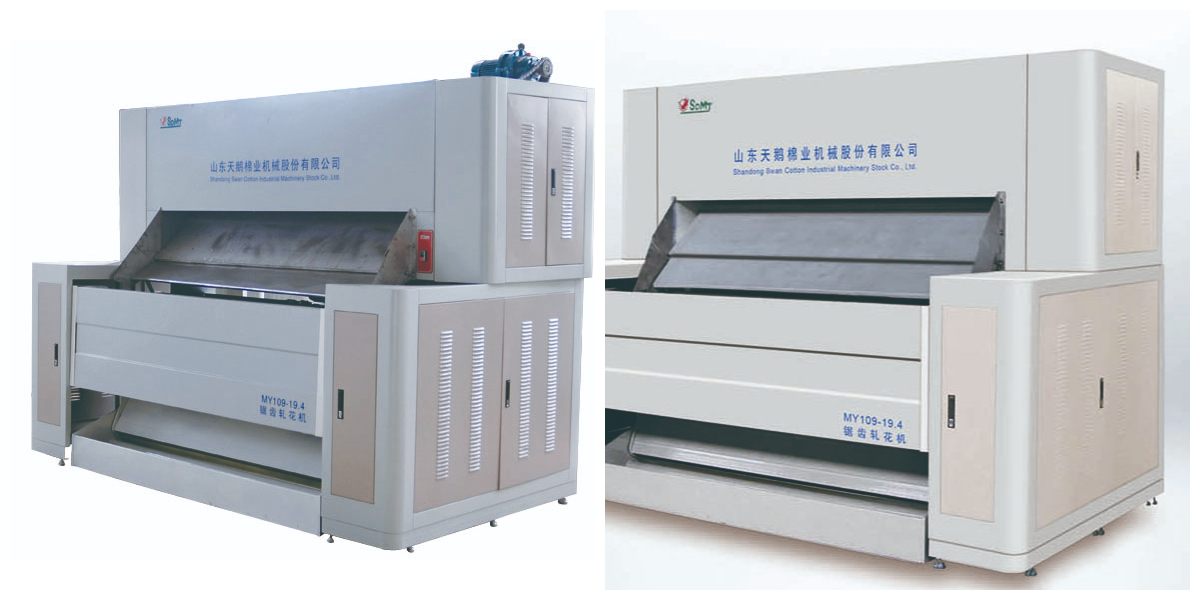
Cotton Saw Gin type MY109-19.2
The MY109-19.2 type cotton saw gin is mainly used to separate the fiber from the seed and remove impurities from raw cotton.
⚙️ 2. Technical Specifications
Parameter |
A unit of measurement |
Meaning |
Designed output |
kg/h |
600-850 |
Equipped power |
kW |
31.12 |
Lint ginning quality |
Meets or exceeds the national standard for ginned cotton |
|
Noise level |
96 db(A) |
|
Number of saw blades (Pieces of saws) |
pcs. |
109 |
Diameter of saw blades |
mm |
320 |
Saw spacing |
mm |
19.4 |
Diameter of brush cylinder |
mm |
380 |
Overall dimensions (W*D*H) |
mm |
1708*3090*2284 |
Machine weight |
kg |
3000 |
? 3. Packaging and Delivery
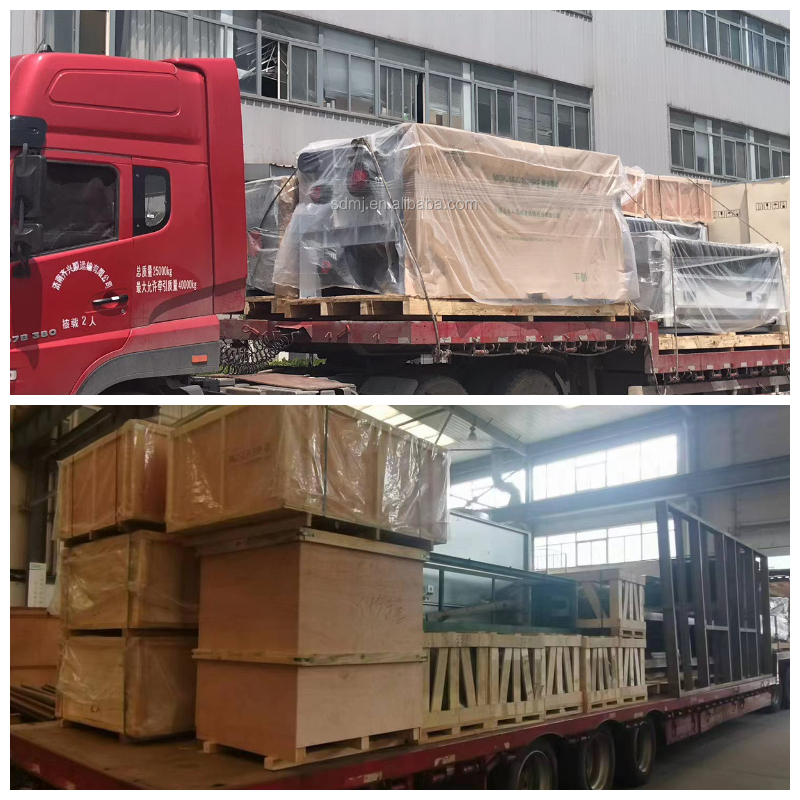
Our company offers individual (customized) packaging methods for customers.
(1) Each machine is securely fixed and reinforced in the container to ensure safe delivery to the destination port.
(2) The entire process of product loading and container sealing is recorded by photo or video, making the entire process visible and controllable.
(3). Cooperation with a reliable shipping company, key time points (stages) are updated in real time.
? 4. Product Inspection
We implement a multi-level, comprehensive quality control process, whereby every product leaving the facility undergoes thorough inspection. Key quality control stages include the following procedures:
(1). Visual appearance control:
An assessment of a product's conformity with established requirements for appearance, including color, shape, dimensions, and surface finish. The inspection is performed visually or using auxiliary means, such as optical and measuring equipment.
(2). Functional performance testing:
Confirmation of the correct operation of a product through its practical use, performance testing, or the use of specialized test setups to evaluate performance characteristics and operational indicators.
(3). Safety compliance assessment:
Monitoring product compliance with current safety requirements and standards, including electrical, mechanical and chemical protection testing.
(4). Packaging and labeling verification:
Checking the strength and integrity of the packaging, the legibility and accuracy of the markings, and the compliance of the packaging materials with established requirements. This stage ensures the safety of the product during storage and transportation and allows for unambiguous identification.