Русский


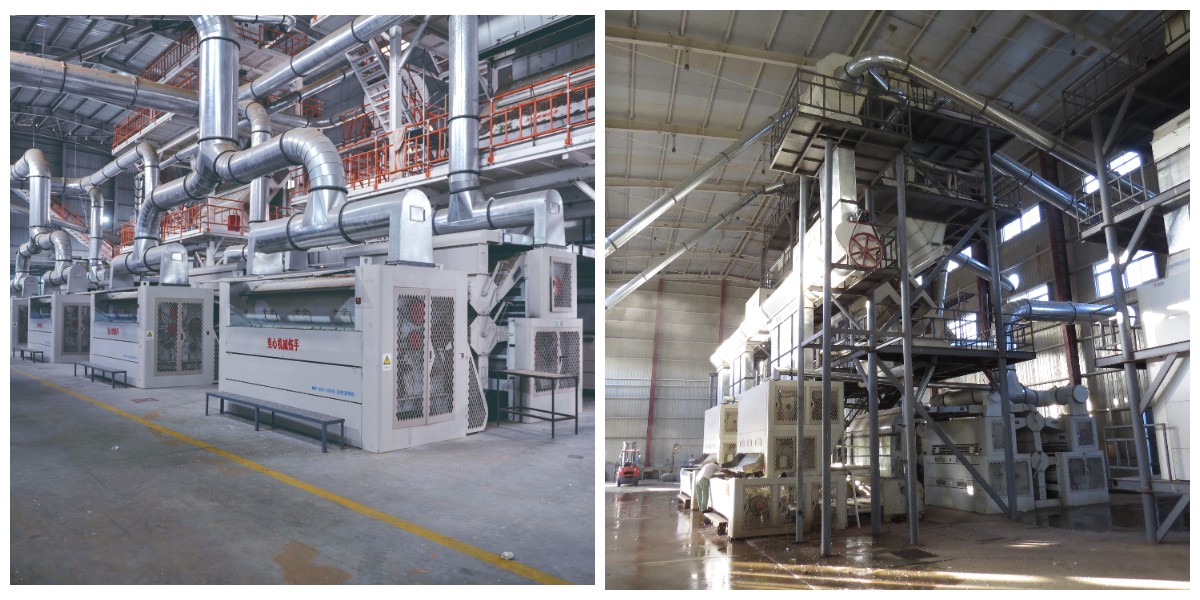
Pneumatic fiber cleaner
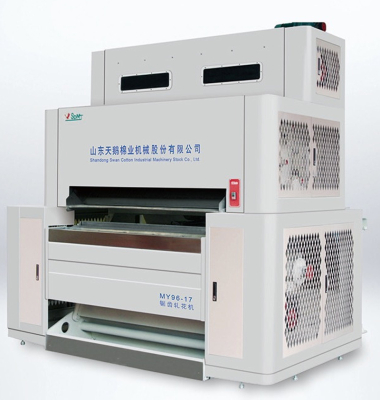
Airjet Type Lint Cleaner
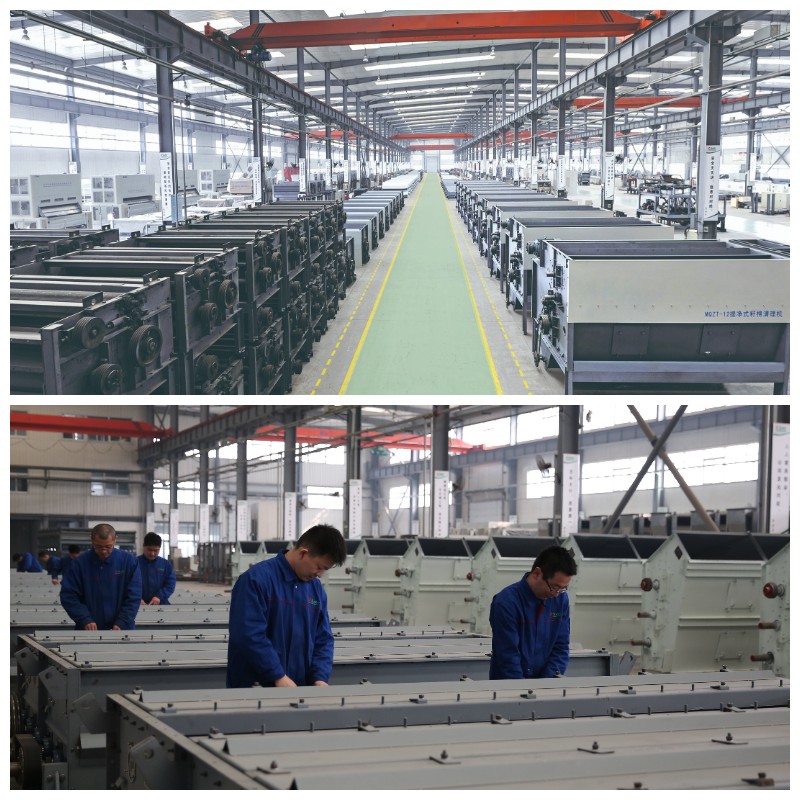
The entire machine is made of various special materials, has a rational design, and is characterized by stable and reliable operation.
The pneumatic fiber cleaner series is characterized by no energy consumption, high reliability, easy adjustment and installation, attractive appearance, and high cleaning efficiency without damaging the fibers.
Airjet Type Lint Cleaner
1. Introduction to the product
Pneumatic cotton cleaners are widely used to improve the overall quality of cotton fiber after ginning by removing foreign impurities and short fibers.
Swan fiber cleaner features stable operation, high product quality and significantly improves the quality of cleaned fiber.
2. Main technical parameters
Model
Productivity (kg/h, cotton)
Installed capacity (kW)
Overall dimensions (mm)
Mass (kg)
MQPQ-3300 |
3300 |
— |
3555×1282×1485 |
320 |
MQPQ-3000 |
3000 |
— |
3555×1282×1485 |
300 |
MQPQ-2000 |
2000 |
— |
2255×1282×1485 |
260 |
MQPQ-1400 |
1800 |
— |
1655×1282×1485 |
230 |
Note: Productivity is given for standard fiber after ginning.
3. Packaging and delivery
We have an experienced packing and loading team to ensure the safety and integrity of your equipment during packing and transportation.
Each vehicle is securely fastened and secured in the container, ensuring safe delivery to the destination port.
The entire process of loading and sealing the container is documented by photo or video recording—the process is completely transparent and controllable.
We cooperate with reliable shipping companies; information about key stages of transportation is updated in real time.


4. Product inspection
Functional testing: Verifies the correct operation of the equipment. Testing is performed in operating mode or using specialized test equipment to check performance and functionality.
Checking labelling and operating instructions: checking the accuracy, clarity and completeness of labelling and documentation, as well as compliance with regulations and standards.
Safety testing: checking the product's compliance with electrical, mechanical and chemical safety requirements.
Testing of materials and components: verification of compliance of the materials and components used with established requirements using chemical analysis, spectral analysis, tensile testing and other methods.